
Roughly $68 trillion is expected to pass from one generation to the next over the coming decades in the United States alone, and a surprising portion of that includes valuable collectibles such as coin collections. Surprisingly, many families lose thousands because they overlook one key detail: how to transfer a coin collection properly.
Whether you’re a longtime collector or a family member inheriting a set of rare coins, handling the transfer of ownership without the right steps can lead to disputes, tax issues, and even the loss of value.
As an expert in estate planning, I’ve seen how a lack of documentation or unclear instructions can turn a prized collection into a source of conflict. However, with careful planning, you can protect the legacy and value of your collection and make things easier for your heirs.
This article will guide you through preparing your collection for transfer, avoiding key legal and financial missteps, and making sure your heirs receive not just the coins but the full value they represent.
Why Planning Is Essential for Coin Collections
Transferring a coin collection isn’t as simple as handing over a box of coins. Without proper planning, the collection’s value can be diminished through mishandling, disputes between heirs, or avoidable tax burdens. Proactive estate planning ensures that your collection is preserved, appreciated, and transferred according to your wishes.
Avoiding Family Disputes
Many collectors assume their family will “figure it out” after they’re gone. Unfortunately, that approach often leads to confusion and conflict. Verbal instructions are not legally binding, and without written guidance, heirs may disagree on how the collection should be divided or sold.
Conflicts often arise when:
- One heir believes the collection should be sold while another wants to keep it.
- There’s no record of which coins are most valuable.
- Family members assume equal value among coins that differ significantly in rarity or condition.
An estate planning attorney can help you document your intentions clearly, minimizing the risk of misunderstandings or legal challenges.
Preserving Numismatic Value
Coins are more than metal; they carry historical, artistic, and financial value. Mishandling a coin, cleaning it improperly, or storing it in a humid environment can destroy its numismatic value. Rare coins, especially those with mint-made errors or unique die varieties, can lose thousands in market value if not preserved correctly.
Collectors should:
- Store coins in archival-quality holders or certified slabs.
- Avoid cleaning coins, which can scratch surfaces and reduce value.
- Maintain a temperature- and humidity-controlled environment or use a vault.
Preserving the physical integrity of your collection is just as important as the legal transfer.
Step-up in Basis and Tax Implications
One of the biggest financial advantages for heirs inheriting a coin collection is the step-up in basis. This tax rule allows assets to be revalued at their market value on the date of death. If your collection appreciated in value over the years, your heirs can sell it immediately with little or no capital gains tax.
For example, if you bought a coin for $1,000 and it’s worth $5,000 at the time of your passing, your heir’s cost basis becomes $5,000. If they sell it for that amount, there is no capital gain to tax.
Without proper documentation and valuation, your heirs may not be able to prove the step-up, potentially resulting in unnecessary taxes. This is where professional appraisals and legal support make a significant difference.
Assessing and Documenting the Collection
Creating an Inventory
Start by cataloging your collection with as much detail as possible. This inventory should include:
- Coin type (e.g., trade coin, error coin, commemorative).
- Date and mint mark.
- Condition or grade.
- Estimated value.
- Notes on known varieties or mint-made errors.
- Purchase price and acquisition date.
Use spreadsheets or specialized coin inventory software to keep records organized and searchable. Include photographs for visual reference.
Collecting Proof of Ownership
To support authenticity and provenance, retain all documentation related to your collection. This includes:
- Purchase receipts.
- Grading certificates from PCGS or NGC.
- Appraisal reports.
- Notes from previous owners if the coins were inherited or acquired secondhand.
These documents help establish ownership and value, which are especially important for estate tax filings or resale.
Storing the Collection Securely
Coins should be stored securely to avoid damage or theft. Consider:
- Safe deposit boxes at a bank.
- Private vault services with climate control.
- Home safes with insurance coverage.
Update your insurance policy to reflect the current value and ownership structure of the collection. This ensures coverage during and after the transfer.
Professional Support: Appraisals, Grading, and Legal Help
When To Get a Professional Appraisal
A formal appraisal is necessary if:
- The collection is part of an estate subject to estate tax.
- You plan to donate coins to a museum or institution.
- You’re considering selling or insuring the collection.
- You want to establish fair market value for your heirs.
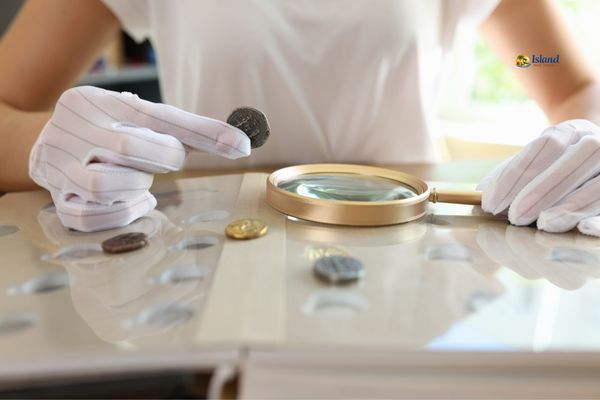
Appraisers with numismatic expertise can identify rare varieties, authenticate mint-made errors, and provide IRS-compliant reports.
These days, it’s pretty easy to find companies that offer free online coin appraisals, and there are quite a few apps as well that have this feature. At minimum, getting an appraisal before you leave your coins to your heirs is an absolute must to ensure you preserve the wealth that might lie in your collection.
The Role of Grading Services
Professional Coin Grading Service (PCGS) and Numismatic Guaranty Company (NGC) are industry leaders in third-party grading. They:
- Authenticate coins and detect counterfeits.
- Assign a grade that reflects condition and directly impacts value.
- Encapsulate coins in tamper-proof holders for protection.
Even a one-point difference in grade (e.g., MS-64 vs. MS-65) can significantly increase a coin’s worth. For rare or high-value coins, grading is often a worthwhile investment.
Consulting an Estate Planning Attorney
An estate planning attorney helps you structure your plan to meet legal requirements and fulfill your wishes. They can:
- Draft wills and trusts.
- Advise on tax strategies.
- Ensure compliance with inheritance laws.
- Help coordinate with appraisers and insurance providers.
Legal guidance is especially important for large or complex collections to avoid probate delays and tax inefficiencies.
Legal Structures for Transferring Coins
Wills and Probate
A will is a legal document that outlines your wishes, but it must go through probate, a court process that can delay distribution and expose your estate to public scrutiny.
Drawbacks of probate include:
- Time delays (often months).
- Legal fees and court costs.
- Public disclosure of your collection’s value.
For smaller collections, a will may suffice, but for larger or more valuable holdings, better options exist.
Setting up a Trust
Trusts allow for smoother, private transfers and bypass probate entirely. Two main types include:
- Revocable trusts: You maintain control during your lifetime and can make changes.
- Irrevocable trusts: Offer tax benefits but require relinquishing control.
Trusts allow you to:
- Specify how and when coins are distributed.
- Assign a knowledgeable trustee to manage the collection.
- Protect the collection from creditors or disputes.
Gifting During Lifetime
Lifetime gifts can reduce your taxable estate, but they come with limits. The IRS allows annual exclusion gifts (currently up to $19,000 per recipient in 2026) without triggering gift tax.
Benefits of gifting include:
- Educating heirs while you’re still alive.
- Reducing estate size for tax planning.
- Avoiding probate for those assets.
Make sure to document these gifts thoroughly and consult with a tax advisor.
Mistakes To Avoid With an Inherited Coin Collection
Relying on Verbal Instructions
Many collectors assume their family knows what to do based on previous conversations. Without written documents, those instructions can be forgotten, misunderstood, or disputed. Legal documentation ensures your wishes are enforceable.
Selling Without Understanding Value
Heirs unfamiliar with numismatics may not understand the opportunity they’ve been given to build long-term wealth and may sell coins to the first buyer who makes an offer. Without an appraisal or market research, they risk accepting far less than the coins are worth. Rare error coins or historical pieces often command premiums that only experts recognize.
Failing To Update Legal Documents
If your will or trust doesn’t reflect your current holdings, confusion can follow. Always update your estate documents when:
- You acquire or sell significant coins.
- You change your intended beneficiaries.
- You move coins to a different storage location.
My Experience as an Estate Planning Expert
As an expert in estate planning, I’ve seen families lose thousands because they didn’t catalog their collection or left unclear instructions. One client had a rare error coin worth over $10,000 that the family sold for face value because they didn’t know what it was. A few hours of professional guidance could have preserved its value for the next generation.
Communicating With Heirs
Writing a Collector’s Letter
A personal letter can explain the significance of your collection. Include:
- How you acquired key pieces.
- Why certain coins matter to you.
- Instructions for care and storage.
This context helps your heirs appreciate the collection beyond its financial value.
Specific vs. General Bequests
Instead of leaving the entire collection to one person, consider assigning specific coins to specific heirs. This reduces disputes and allows for a more equitable distribution, especially if some coins are significantly more valuable than others.
Transporting and Transferring the Collection
Safe Shipping and Delivery Options
For valuable collections, use:
- USPS Registered Mail for insured and trackable delivery.
- Armored transport services like cash-in-transit (CIT) providers for high-value or bulk transfers.
- In-person handoff with documentation when feasible.
Ensure all shipments are insured for full value and comply with regulations.
Documenting the Transfer
Keep a record of:
- Shipping receipts.
- Insurance coverage.
- Signed confirmation of receipt by the new owner.
This protects both giver and recipient in case of disputes or loss.
Protect Your Legacy With Proper Planning
Transferring a coin collection isn’t just about passing on physical items. It’s about preserving history, value, and intention. By cataloging your collection, securing proper appraisals and grading, setting up legal structures such as trusts, and communicating clearly with heirs, you can avoid common pitfalls and ensure your collection is received and appreciated the way you intended.